Category Archives: The Kingdom

Missing pieces: God’s design for government

If God’s Kingdom began to influence human government, what would it look like?   There was a time not long ago when I would have been utterly clueless about that question.  The church wasn’t teaching it, and certainly Christian bookstores weren’t overrun with titles on the subject.  Yet government is a huge part of life, and God did not leave us in the dark.   So we’ll begin this short study with a look at the ideal, and then move on to the practical.  (Since we’re still living in a fallen world, we need to examine how to influence our fallen, imperfect government with the perfect government of God).

The first two things about kingdom government is that it begins with God, (not man), and it governs not from the halls of power, but from the hearts of servants.  Unless we firmly grasp the humility of God’s government we will become a stumbling block to our neighbors as we champion politics over love and relationship.  It’s difficult to point to a loving God and a selfless Kingdom in the heat of a political debate.

This is the government of the Kingdom:  “I will put my laws in their heart, and write them on their mind.” (Hebrews 10:16)

And what is the law?  “To love God with all your heart, and to love your neighbor as yourself” Matt. 22:38-40

Imagine a world, or even just a community where that simple law was universally honored.  Where would be the need for policemen, judges, prisons, divorce courts, and the Better Business Bureau?  Obviously we’re talking about the ideal.  But here’s the thing: Even though this simple “self-government” of love may never  fully blossom in our present world, to the degree that it does, it will influence everything around us, including the government we do have.   The more citizens are yielded to the love of God, the smaller the need will be for a large civil government with its laws and regulations.  That’s where we’ll start in the next post.

Missing pieces: discipling nations

Once upon a time God discipled a nation.   He took a group of bedraggled slaves and changed them into such a glorious nation that foreign dignitaries were left speechless.   When Jesus told us to “make disciples of all nations” he was thoughtful enough to give us the stellar example of Israel to demonstrate what he had in mind.

Consider:  When Moses led the Jewish slaves out of Egypt,

And yet in the space of four centuries God had so transformed this ragamuffin people that the Queen of Sheba was dazzled by the glory of Israel.  (1 Kings 10:4)   Such is the power of God’s transforming Truth for any nation from broken Bosnia to impoverished Haiti to floundering America.   And it is God’s dream for the nations.

The Gospel of the kingdom begins with the promise of redeemed hearts (Ezekiel 36:26), and goes beyond to the transformation of nations.  There’s not a hint of heaven or eternal life in this promise: “If you indeed obey the LORD your God and are careful to observe all his commandments I am giving you today, the LORD your God will elevate you above all the nations of the earth.” (Deuteronomy 28:1).  The commandments God is referring to here have nothing to do with heaven and the hereafter,  but about the everyday truth of living together in peace, ensuring justice, conducting business, educating children, caring for strangers and the environment, growing crops, practicing good health, and a host of other “how-tos” that will produce blessing and life.

The gospel of the Kingdom bids us pick up the dream of God for every person, every nation, and every sphere of life.   Check back soon for some pieces of God’s dream for government.

The missing pieces in Haiti

As much of our prayers and attention are being directed towards the suffering and tragedy in Haiti, this might be a fitting time  to focus more clearly on God’s heart and purposes for that nation.

I personally don’t believe God is judging Haiti.  There will be a judgment for the nations at some point in the future, but for now Jesus tells us “the Father judges no man, but has committed all judgment to the Son:” (John 5:22), and John further assures us that “God sent his Son into the world, not to condemn the world, but to save the world.” (John 3:17)  All that destruction in Old Testament times was something very different from the New Covenant, when “God was in Christ, reconciling the world to himself and no longer counting people’s sins against them.” (2 Cor. 5:18)   What happened in Haiti was not about their sin, (after all, we are still standing), but the result of a world convulsed by the sin of our first parents.

And that’s what these missing pieces are about:  Jesus Christ entered the world to undo the effects of sin, and to restore the universe to it’s original purpose.   Even though that process will not be finished until He returns, the cornerstone was laid at the cross, and the work commenced at His resurrection.

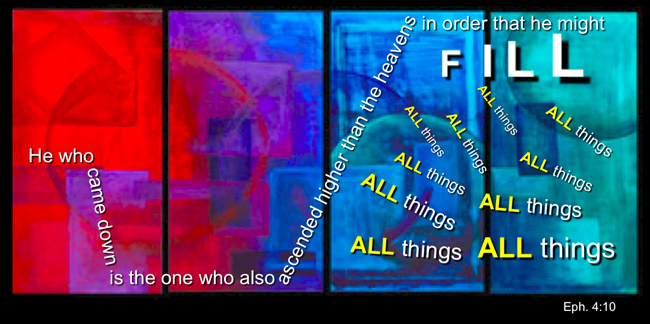
Consider Ephesians 4:10:

Forgiveness on a personal level is just one glorious aspect of the Gospel.   The “gospel of forgiveness” really IS great news because it means the sin issue is finished and we are forgiven.  Hallelujah!

But the same one who procured our forgiveness boldly proclaimed “the gospel of the Kingdom,” which is about Him filling all things.  This is good news for Haiti because even though the partial gospel of forgiveness has been embraced by many, the absence of the rest of the Gospel which lifts up the poor, transforms government, and celebrates justice and right relationships has kept the Haitian people enslaved to poverty, oppression and corrupt leaders.

The great Dutch theologian and statesman, Abraham Kuyper said, “There is not one square inch of the entire creation about which Jesus Christ does not cry out, ‘This is mine! This belongs to me!'” And if it belongs to Jesus, it will be glorious.  That’s where we’re headed with this talk of missing pieces.

Tracking down the missing pieces

When Jesus announced his mission in the synagogue in Nazereth, (Luke 4: 14-30), he declared a kingdom that would transform the world.   God’s dream encompasses all creation from streets to stars, from jails to juries.  E. Stanley Jones expressed it succinctly: “The Kingdom is God’s total answer to man’s total need.”

Yet at the beginning of 2010 the tragedy, in the words of G. K. Chesterton is that “The Christian ideal has not been tried and found wanting. It has been found difficult; and left untried.” Of course the gospel of forgiveness has been embraced by countless generations of glad people, but the gospel of the Kingdom has barely been taken off the shelf.

I want to initiate a little series here at the beginning of the year that will address the kingdom in regard to business, government, education and the “rest” of life.  It’ll take awhile to work our way through, (and I’ll almost certainly take some detours along the way), but I’m excited about the discoveries we might make in the process.  Not only will this help me to order my own thoughts, but hopefully it’ll help some others to grasp the Kingdom in a more concrete way.

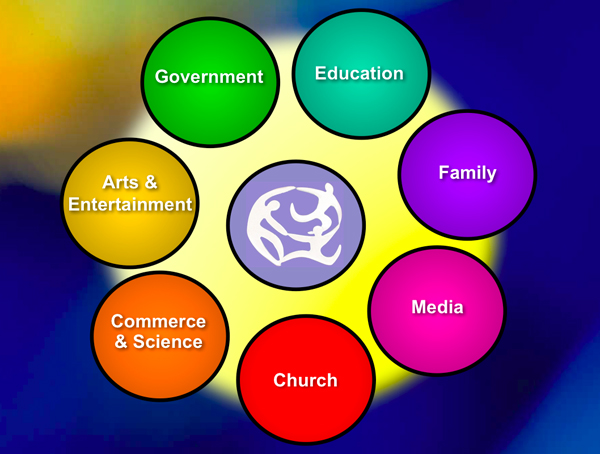
Back in 1975 God spoke to three Christian leaders independently of each other about the imperative of reaching the seven “spheres” of society.   Loren Cunningham, (founder of Youth With a Mission), Bill Bright, (founder of Campus Crusade for Christ), and Christian thinker Francis Schaeffer were each impressed by the Spirit to begin focusing on raising a generation to reach these seven spheres with the truth of Christ and His Kingdom.  It wasn’t about Christians “taking control” of culture, (for the Kingdom is never a matter of “control”), but about serving and influencing these strategic spheres with humility, insight, and love.

Lets begin by having a look at these spheres:

“The same one who came down is the one who ascended higher than all the heavens, so that He might fill all things.” (Eph. 4:10)  The seven spheres include Education, Family, Media, Church, Commerce, Government and the Arts.

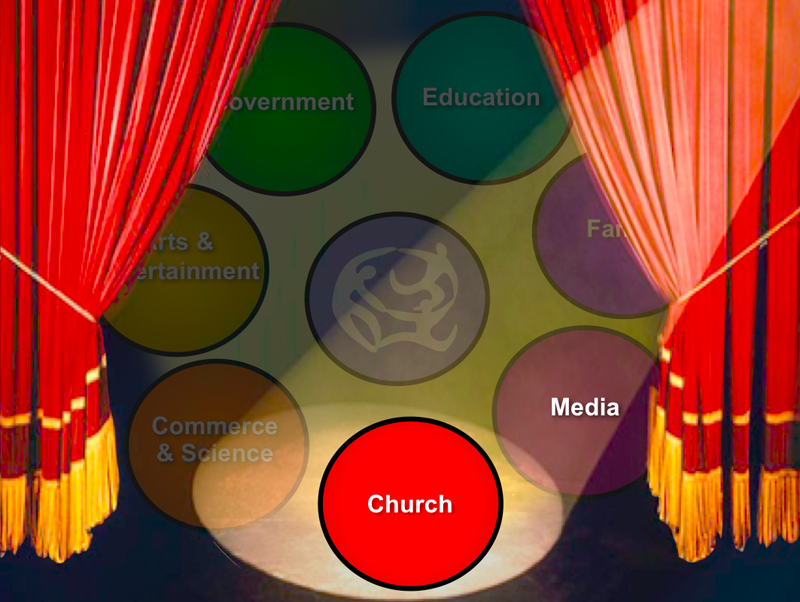
God’s kingdom plan is to bless the human race and to reveal his staggering beauty in each of these seven areas!   But the great tragedy of today’s gospel is that in forgetting the kingdom we have focused the spotlight almost entirely on the individual and the church.  And this in turn has banished the rest of life to the shadows, beyond the scope of God’s grace.

The consequence is a Christianity that is largely expressed within the brick and mortar walls of a church building while the rest of the “real” world slides quietly into darkness.   What are we to do?  What does the gospel have to do with media, classrooms, governments and Wall Street ?   I hope you’ll join me in the weeks to come as we try to shed some light on the missing pieces of the Gospel.

A shocking observation

I’ve made a shocking observation.  After nine years of teaching Worldview and the Kingdom of God to students from countless nations, I’ve just noticed in recent months an alarming increase in the number of young Believers who defend Socialism as the hope of the human race.  I’m speaking here of Christian young people, Christian Socialists.  It comes as no surprise, really, and the blame lies clearly with my generation and especially with the church of my generation.

When the church exchanged “Thy Kingdom come” for “Come quickly Lord” we opened a worldview vacuum that young people refuse to tolerate.  A gospel of death, (“Do you know where you’ll spend eternity?”) is a piddling crumb to throw at a generation that’s crying out to know “How then, shall we live?”

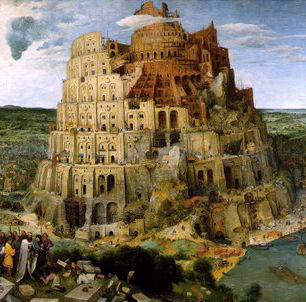
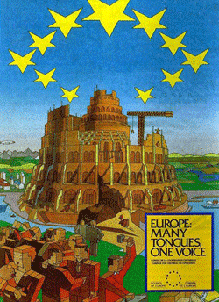
Greedy, materialistic capitalism remade us into an army of consumers, bankrupt, (literally), and bereft of spiritual values.  And now a younger generation surveying the landscape sees no alternative but the Babylonian “Yes we can” worldview of Utopian Socialism. “Let us build a city…. let us reach the sky… let us make a name for ourselves…” (Genesis 11:3-4)  Socialism is a Kingdom without a king, or perhaps we should say a kingdom with the wrong king.   It’s a kingdom of fallen man with darkened hearts and blinded eyes; a failed Utopia that has never once succeeded since Plato wrote about it in 360 BC.

How could Socialism, formulated in the mind of Karl Marx, who boasted “My objective in life is to dethrone God and destroy capitalism” be compatible with the glorious kingdom of the One who came to reveal the true face of the Father?   It’s a substitute, a counterfeit, and we’re in a heap of trouble until the church repents of it’s kingdomless message and begins to re-educate itself in the ways of God.

The Tower of Babel by Pieter Bruegel the Elder: 1563 AD
An early EU Poster. "Let's build... reach the stars... yes we can."

On a personal note, It’s good to be able to unpack at my Mom’s house in Maryland after twenty-three flights, six schools, and eight weeks of travel.  Highlights of my trip included:

  • Teaching for the first time in the Middle East, (Lebanon), and experiencing the unbelievable warmth and joy of the culture.
  • My first opportunity in Milan, and attending an Alpha Course in an ancient church where Barnabas baptized the first believers.
  • Meeting a young Kuwaiti and hearing his AMAZING testimony of how Jesus met him in the midst of his Muslim background.
  • Celebrating Thanksgiving with my international YWAM friends in Budapest.
  • The honor of joining YWAMers in Denver as they remembered their friends and victims of the shooting that occurred there two years ago.
  • Meeting new students from all over the world and having a small part in their dreams and passion for changing history one person at a time.
  • The problem with a vacuum

    “The Kingdom is God’s total answer to man’s total need.”
    – E. Stanley Jones

    With each opportunity to teach the Kingdom I become increasingly convinced of two things:  That the Kingdom is God’s answer to every human need, and that the church’s abandonment of the kingdom is the single greatest tragedy of modern times.

    • Is the problem poverty?  The kingdom is the answer.
    • Is the problem crime?  The kingdom is the answer.
    • Is the problem hopelessness?  The Kingdom is the answer.
    • Is the problem greed?  War?  Racism?  Broken families?  Government corruption? The kingdom is the answer.

    As long as the church holds forth the kingdom as the great plan of the ages, mankind has a hope, a plan, and a light to illuminate every problem.  But when the church replaced “Thy kingdom come” with “Come quickly Lord” a vacuum ensued that sent history into chaos.

    And nature, of course, abhors a vacuum.   We abandoned kingdom hope and fell into despair.  We abandoned kingdom compassion and opened the way to Marxism.   We stepped away from the arts and funneled our gifts into self-entertainment, (“Christian concerts”, “Christian films”, and “Christian music”), to  discover decency had fled our theaters and concert halls.   We forgot the Kingdom call to steward nature and are reaping an environment that is strained and abused by consumerism and neglect.  We deserted God’s government of the heart, (love, generosity, conscience, and personal responsibility), and inherited a behemoth state that strains to regulate everything from the words we use to the light bulbs we buy.

    The way out of our mess is exactly as it was in Jesus day: to repent and embrace the kingdom, to seek the kingdom, to pray for the kingdom, and to make the kingdom our daily priority and pearl of great price.

    Banging our heads against reality

    “If we will not learn to eat the only food that the universe grows – the only food that any possible universe can ever grow – then we must starve eternally.”  – C.S. Lewis  (The Problem of Pain)

    A crazy number of my friends are finding themselves in the agonizing process of watching their children walk down the road of ruin.  These are good parents who did the best they knew, and yet somehow it’s all turned out so terribly wrong.

    It’s made me think about how reality is wrapped up in God and in His Kingdom.  When we turn our back on the Father we walk away from the world as it is.   A person cannot simultaneously resist God and embrace life because they are wrapped so tightly together.  To resist God is to resist purpose, health, joy and relationship.  Such a choice will yield loneliness, addiction and mental illness as surely as jumping into a fire will produce pain.

    God doesn’t punish modern day prodigals any more than the Father punished his prodigal son.  The choice is its own punishment.   Sons and daughters weren’t made for pigsties nor brier patches, and when we abandon the Father’s outrageous love to live in the land of illusion it is we who thrash ourselves.

    We were made for a kingdom.  My hope is that when the children have had their fill of living against nature, the Kingdom will beckon their feet back into the land of the living.

    Autumn Woods

    This is what it looks like right now in my part of the country.  Friday (Oct. 16) I leave to teach for two weeks in Kona Hawaii.  There I’ll be seeing a different kind of glory reflecting yet another facet of the beauty of God.

    The keys to passion

    After church this past Sunday an old friend visiting in the morning service, caught me with tears in her eyes and said, “I don’t know what it was, but something broke free inside of me this morning as I watched you playing the piano with such joy and and passion.” Passion connects.  God’s Spirit inhabits it and reminds us that we were born for passion. 

    One delightful work of the Spirit in my heart these recent years could be described as a rebirth of passion. There was a deadening middle-period in my adult life when I trudged on for nearly a decade without ever shedding a tear. I remember when it was a regular thing to beg God for an unleashing of my emotions.  Now – they ambush me at the most random times. And along with tears has come a surprising ability to feel, move, shout, dance, cheer, and celebrate with an abandon I never could have imagined. 

    It’s made me wonder about the change. How did I come to this point, and what brought me here? First off I no longer feel like an orphan before God. I’ve had a deep and lasting revelation of the outrageous love of the Father towards me. He not only loves me, but He likes me. And He has adopted me into the shared life of the Father Son and Spirit. Orphans, I understand have often bankrupted their emotions in the process of yearning for belonging, intimacy and family. But now that I know I belong, the wells of my passion have been restored.

    The second thing, I believe, is that I’ve come to understand the Kingdom. And the Kingdom means everything matters. I no longer have to sort through my days wondering what components of my life interest my Father, and which ones go beyond his scope of caring. He fills it all and brings meaning to everything from playing music to making breakfast, from blogging to biking. I’m no longer enslaved to a tightfisted life of religion, but I’ve been emancipated to soar in a world bursting with the presence and passion of the Father, Son, and Spirit.

    I posted this years ago, but it bears repeating.  George Target writes in regard to religion’s affect on the sons of Adam,

    They don’t smoke, but neither do they breathe fresh air very deeply.

    They don’t drink wine, but neither do they enjoy lemonade;

    They don’t swear, but neither do they enjoy magnificent words;

    Neither poetry nor prayer.

    They don’t gamble, but neither do they take much chance on God;

    They don’t look at women and girls with lust in their hearts,
    But neither do they roll breathless with love and laughter,
    Naked under the sun of high Summer.

    It’s all rather pale and round-shouldered, The great Prince lying in prison.

    If any of this sounds too familiar, I pray that you, too will experience a jaw-dropping sense of belonging to the Father, Son, and Spirit, and a staggering revelation of how the Kingdom brings meaning to even the mundane things of life.

    Receiving the kingdom, part 3

    After a short diversion, (due to my concern over the deep political fracture in America), I want to pick up with ideas about receiving the kingdom.  Just this week I had another friend say, “OK… so how do we actually do it?”

    Just a quick review of the first two steps, and we’ll move on:

    • Receive the Love of God, and stop trying to earn it.  Nobody in the Gospel record ever had to earn the love of Jesus.  He simply accepted people as they were.  It’s when we finally accept the outrageous love of the Father without condition by faith that we’re born again into his life.
    • Repent: which means not just turning from sin, but actually rethinking everything we thought we knew about God, his world, ourselves and the human race.   No one can receive the kingdom while clinging to his own human reasoning, religious notions, and cherished opinions.

    The next step of the journey seems to be following the King. Have you ever noticed how Jesus invites people to follow him, refers to those followers as “disciples,” and never once labels them “converts”?  “Convert” is one of those terms we evangelicals would be hard-pressed to drop from our vocabulary.  And yet its an idea the Son himself managed to splendidly avoid except for one time when he was taking the pharisees to task for traveling over land and sea to make a “convert.”   Jesus was obviously more concerned about people actually following him as disciples than offering them a one-time religious experience.

    To follow Jesus means to become a “red-letter” Christian, one who actually heeds his words, and follows him into the wide-open adventure of turning the other cheek, laying down our lives, giving away riches, feeding the poor, casting out demons and healing the sick.  This is the life Jesus seemed to have in mind when he spoke about his kingdom.

    Sadly, we evangelicals often make Christianity a personal affair, a transaction where we exchange “personal” faith for a “personal” experience that’s supposed to insure us a “personal” place in heaven while we too-often duck-out on the kingdom every chance along the way.  I don’t know how God will do his accounting, but I worry that the safety we find in our “born-again conversion” might sometimes lead us away from the main point, which is the red-letter Kingdom of God.

    Blog 5

    Seeking the Kingdom, part two

    I’m afraid I may mess with some sacred cows on this post, but I’ve been wanting to write about this for quite some time.  When Jesus declared the gospel he didn’t say the sort of things we say today about the promises of going to heaven when we die, the need to say a sinner’s prayer, or even the imperative to “ask Jesus into your heart.”  As true as all of these things may be they miss the essence of the gospel, which of course is the Kingdom.  Notice Jesus’ declaration of the gospel:

    “Repent, for the kingdom of heaven is near.” (Matthew 4:17)

    With only eight words, that’s a pretty concise message.  But what the heck does it mean?   First off, most of us evangelicals have grown up with a narrow, parochial understanding of repentance.  We’ve been steeped in the doctrine that this Greek word, matanoia is limited pretty much to the idea of turning from sin, often with tears and time spent at an alter.  Although there’s an element of truth in this, it’s not even close to the full meaning of the word.  And the resulting problem is that the whole affair becomes focused on sin and getting released from sin, rather than on receiving the Kingdom.

    In the original Greek, (in which the Gospel of Matthew was written), metanoia meant changing one’s mind or heart about someone or something, and in the context of Jesus’ declaration it meant that we are commanded to look at the whole world with new eyes.  He, the King, has arrived on the scene.  He has redeemed the entire cosmos, (Col. 1:20), and nothing can ever be the same again.

    My experience over these past few years is that seeking the kingdom involves a continuous, lifelong process of rethinking everything, asking continuous questions and receiving an ever-refined prescription for my fuzzy, clouded vision and silly ideas about God and his world.

    But here’s where it gets interesting: Some of that rethinking has been in regard to my evangelical heritage.  I’ve realized that much of what I received when I came to Christ was not a kingdom, (I spent about twenty five years with no understanding of that), but ideas and notions I inherited from a feeble Americanized evangelical church.

    It feels great to be on the journey, the quest for the Kingdom as it is.  But the moment I stop questioning, the journey comes to a screeching halt.  In order to receive the kingdom we have to first lay down our notions of what we’ve always believed. We must repent and rethink everything.

    After two exciting weeks of teaching in Romania I’ve returned home to Maryland and am enjoying time with family and friends.  My schedule in the coming months will be pretty full of travel, but I expect to do it from this side of the ocean rather than from Europe.

    The YWAM Cafe in Constanza, Romania
    DTS Students in Constanza, Romania